World
Australia Bans Iran Ambassador, Israel Australia Relationship Explained
Australia is set to formally recognise Palestine at the United Nations this September, marking a significant pivot in its Middle East policy. Foreign Minister Penny Wong stresses the move supports a two-state solution and peaceful resolutions. At the same time, Canberra has expelled Iran’s ambassador over antisemitic attacks on Sydney properties, signalling a tough stance on foreign-led threats.

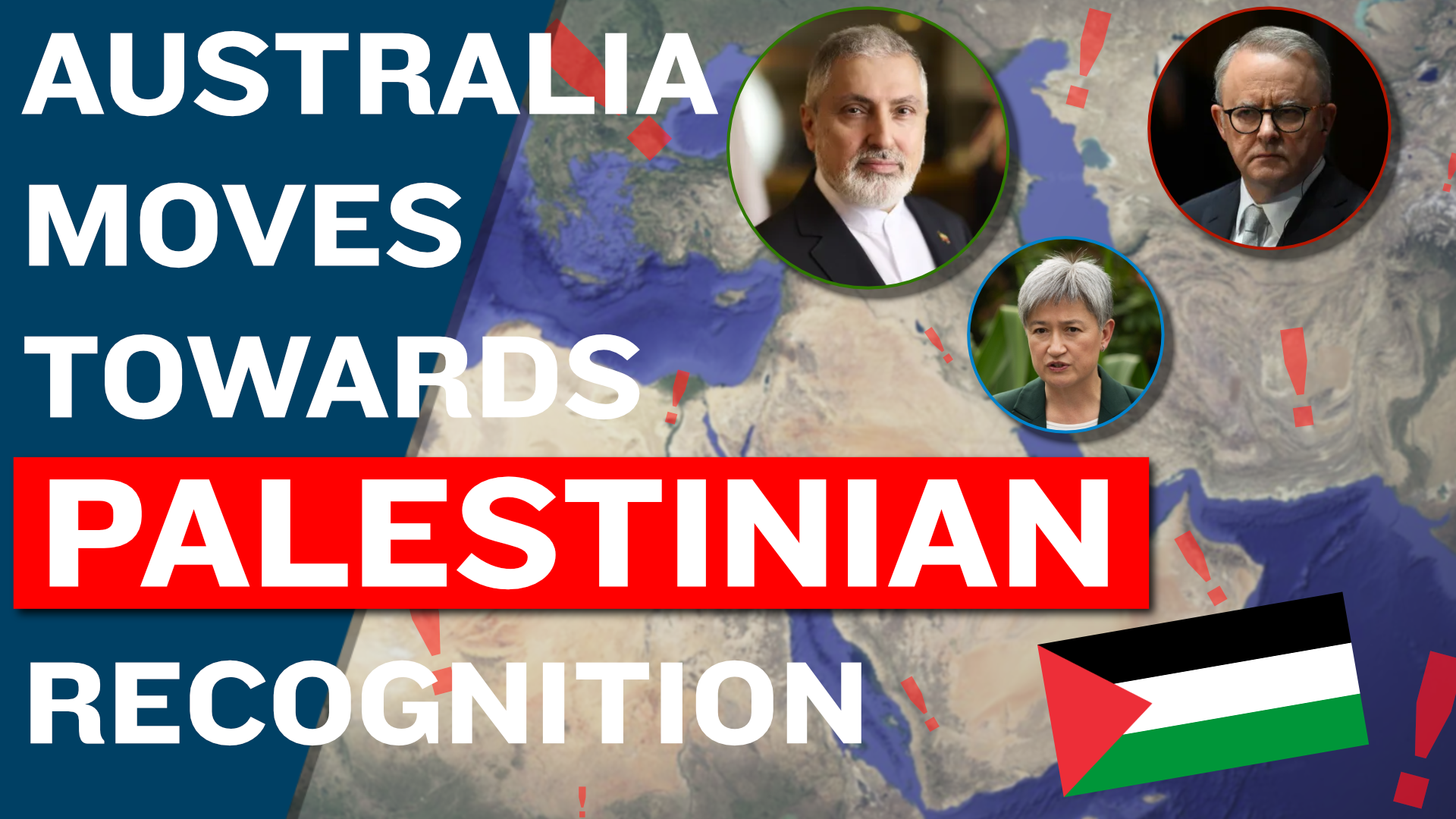
Australia is preparing to formally recognise Palestine at the United Nations General Assembly this September, a move that signals a significant shift in the nation’s foreign policy. Foreign Minister Penny Wong has confirmed the decision, emphasising Australia’s commitment to a two-state solution and to supporting peaceful resolutions in the Middle East. So in this video we’re going to recap what’s been happening with Australia’s middle east relationships, and how our role in the region could change going forwards.
So Australia’s recognition comes after years of discussion and diplomatic consideration, with Canberra indicating that the move will align with international law and ongoing efforts for Israeli-Palestinian peace. However, the announcement has sparked a debate at home, with a recent majority of Australians expressing the view that now is not the right moment for formal recognition, citing regional tensions and the potential for diplomatic backlash. According to Resolve strategic polls only 24% of Australians support recognising palestine, while 76% either don’t support recognition or at least wait until Hamas is removed from government.
At the same time, Australia has escalated tensions with Iran, expelling the Iranian ambassador following a series of antisemitic attacks on Sydney properties, which Australian authorities say were orchestrated by Iran. Prime Minister Anthony Albanese condemned the plots, stating that the attacks were unacceptable and a violation of Australian sovereignty. ASIO, Australia’s domestic intelligence agency, has provided evidence linking the Iranian state to these plots, prompting swift diplomatic action and signalling Canberra’s intent to hold Iran accountable for any foreign-led terror activity on Australian soil.
The expulsion of the ambassador is an unprecedented move, marking the first time since the second world war that australia has expelled an ambassador, highlighting the severity with which Australia views the threats.
The dual development of recognising Palestine and confronting Iran places Australia at a pivotal point in its international relations, particularly regarding the Middle East. For Iran, the diplomatic strain intensifies at a time when the country is under mounting international pressure over its nuclear program and strained relationships with Western nations.
Experts suggest that Australia’s actions may further isolate Iran on the global stage, increasing scrutiny and limiting its regional influence. The move also sends a strong signal that Australia is willing to act decisively in defence of its citizens and values, including condemnation of antisemitism and foreign-directed violence.
Australia’s stance is likely to strengthen its relations with Israel and the broader international community committed to countering extremism. Israel had publicly welcomed the actions made by australia, including listing the iranian revolutionary guard as a terrorist organization but Australia’s decision to recognise palestine and Netanyahu’s reaction clearly shows how strained the relationship is.
By publicly linking Iran to attacks on Australian soil and taking concrete diplomatic steps, Canberra reaffirms its alignment with allies who prioritise security and human rights in the Middle East. The recognition of Palestine, while controversial domestically, could also position Australia as a proactive player in international diplomacy, seeking to balance support for Israel with advocacy for Palestinian statehood.
This balancing act, however, carries inherent risks, as it may attract criticism from countries opposed to Palestinian recognition or those allied with Iran.
Domestically, the government faces a delicate political landscape. Public opinion appears cautious, reflecting concerns over the timing of recognition amid ongoing regional instability. Analysts suggest that while Australians broadly support peaceful resolution in the Middle East, many are wary of actions that could embroil the country in complex foreign conflicts or jeopardise trade and security relationships.
The government, therefore, must navigate not only international diplomacy but also domestic sentiment, ensuring that its foreign policy moves are carefully explained and justified to the public.
In summary, Australia’s upcoming recognition of Palestine at the UN, coupled with the expulsion of Iran’s ambassador over antisemitic attacks, marks a defining moment for Canberra’s international policy. These measures underscore a commitment to both human rights and national security while signalling to the world that Australia is willing to act independently when its values are threatened.
For Iran, it adds pressure at a critical juncture, while for Australia-Israel relations, it reaffirms a strong and shared stance against terrorism. As the September UN Assembly approaches, all eyes will be on Canberra to see how it manages the delicate balance between international engagement, regional stability, and domestic opinion.
Before we begin — a quick note. Our 10th edition of the Snapshots newspaper is out now, and we’re already gearing up for the 11th edition. If you haven’t grabbed your free copy, head to www.thoughtdigestmedia.news/snapshots to read it online.
https://www.abc.net.au/news/2025-08-26/iran-behind-antisemitic-attacks-asio-says/105697762
Discover more from Signal News Sydney
Subscribe to get the latest posts sent to your email.