State Politics
Why Labor Keeps Losing Tasmania

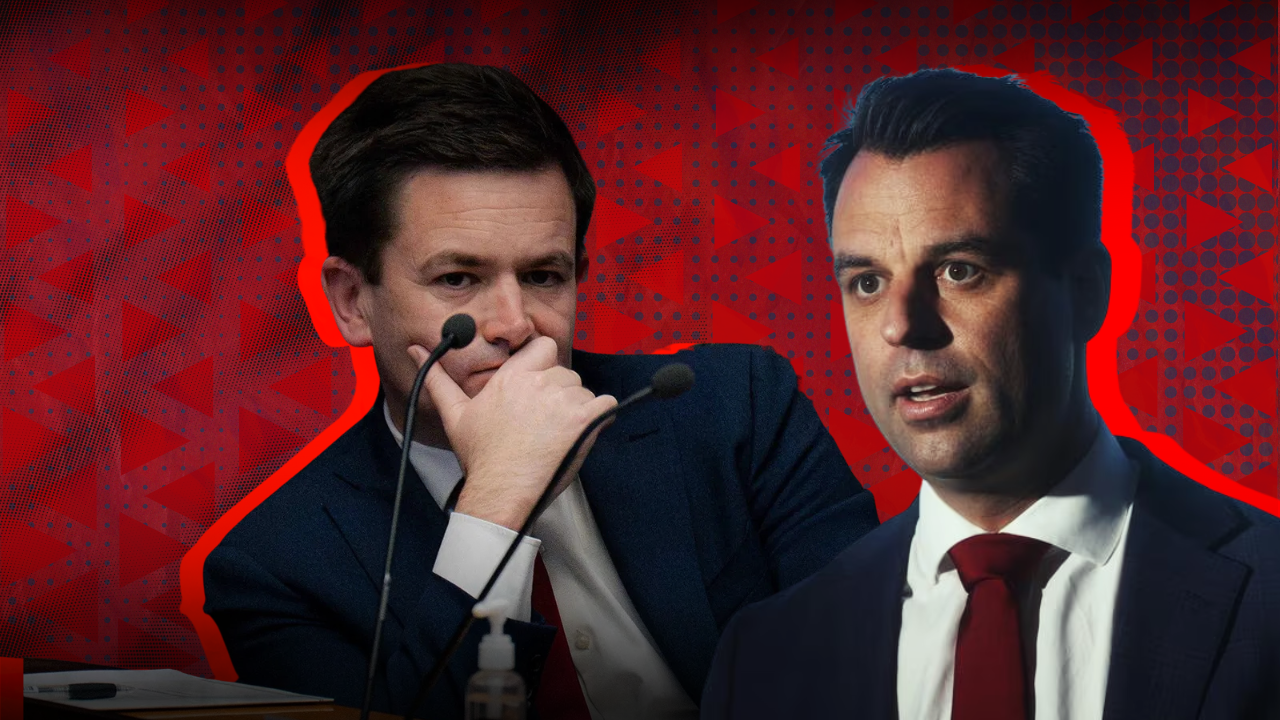
With concerns mounting on the state’s media industry, A much more stark picture is painted on Labor who have been quoted by political analysts as having a communications problem, facing structural barriers and internal issues that stops them moving forwards.
When TDMG compiled data on politicians, PR firms and the news industry we observed extraordinary weak connections both with these firms and the mainstream media which adds more angles as to why Tasmania’s captured and controlled media industry exists.

Our data indicates that Tasmania’s mainstream media maintain strong connections with the Department of Premier and Cabinet (DPAC), indirectly with the Tasmanian Liberal Party, and individual politicians. A revolving-door culture (where journalists transition into advisory or communications roles) is prevalent across outlets. Former journalists frequently move into DPAC, establish private consulting firms, or relocate to mainland roles.

By contrast, our examination of Tasmanian Labor found a markedly weaker media and communications apparatus. What capacity does exist appears to rely heavily on bureaucrats and students rather than experienced political communications professionals. While precise staffing figures are unavailable, it is understood that State Labor politicians and their secretariat operate with significantly fewer staff. In some cases, roles that would ordinarily be paid positions within the Liberal Party structure are reportedly filled on a voluntary basis.
Based on its communications and press strategy, Tasmanian Labor appears to be operating within an outdated media framework. The party continues to behave as though The Mercury constitutes the primary media landscape, with an implicit expectation that the ABC will provide narrative framing and that regional outlets will passively amplify its messaging.
That assumption no longer reflects the reality of Tasmania’s media environment. The industry has undergone rapid structural change, with digital-first outlets, independent publishers, and social media platforms now shaping how political information is discovered, interpreted, and shared. Audience engagement has shifted away from institutional gatekeepers toward fragmented, personality-driven and platform-specific consumption — a shift Tasmanian Labor has been slow to recognise or adapt to.

Meanwhile The Liberals grew up inside the media ecosystem. For decades the Liberals have become intertwined with journalists becoming advisors, ministers maintaining long personal relationships with editors and a culture of off-the-record access. The party also understands the small-state effect very well where everyone knows everyone and trust becomes personal.
Given the significant media and political resources available to the incumbent government, a greater volume of information is fed to the media. This sheer scale of resources and output typically means the party in power dominates in terms of total content.
In addition, Most newsrooms operate with a set of clear incentives: to attract clicks, maximise engagement, build a loyal viewership, and ultimately generate revenue. Even public broadcasters like the ABC, while mission-driven, are still influenced by audience metrics and public perception. What we see in Tasmania is a stark contrast between the parties: the Liberals consistently align with these media incentives, providing the content, access, or narrative the media tends to reward. State Labor, by contrast, largely ignores these market-driven dynamics. Their media presence is minimal, reactive rather than proactive, and often fails to leverage the mechanisms that could generate attention or shape coverage in their favour.
As noted by Brad Stansfield of Font PR, the Labor party often takes a position of reacting rather than acting, this expands well into the context of Tasmanian media where the party responds late to already established narratives, stories and agendas set by the government rather than setting it’s own.
More broadly, the party mistakes media presence for media strategy. The party often focusing on press releases, doorstops and single events. This is chosen over repeated, sustained messaging or laddering.
A more interesting contrast to this whole issue is the so-called “Wilkie effect” which with the rise of more independents has crushed the Labor vote. Wilkie’s ascension to parliament (at least in local minds) reset the integrity bar, putting transparency front and centre of voters. This saw a significant shift of voters on the left which may have created an expectation that politicians should communicate clearly and act independently of party factionalism.

While labor attempted to respond to the Wilkie effect with a proposal to have Independent Ruth Forrest MLC as treasurer, the party also advocated for abolishing the integrity commission to be replaced with “a more effective” anti-corruption commission” yet voters at the 2024 state election were not convinced seeing Vote siphoning to independents Christie Johnston & Peter George.
How The Media was (probably) captured by the Liberals
With such a competitive and thin media environment the big outlets need content, access, and narratives to stay relevant and generate engagement. With the Labor party exporting talent & resources to federal politics, undergoing internal factionalism and holding weak media/PR connections saw the party losing the media battle. These struggles saw Labor fail to provide consistently, so reporters have little incentive to cover them beyond reactive stories.
The Liberals, by contrast, flood the system with information, effectively “trapping” the media into covering them because they are the easiest source of scoops, visuals, and storylines. Because the Liberals provide a steady stream, media outlets reward them with prominent placement, more positive framing, and repeat coverage.
Beyond editorial preference, the Liberals’ consistent engagement often earns advertising discounts or partnerships, which further strengthens relationships with media owners and decision-makers.
The combination of supply, relationships, and incentives locks in the Liberals’ dominance, while State Labor with weaker engagement and fewer resources remains marginalised.
Why Labor’s Response Next Will Likely Determine Tasmanian Media

While the industry is under scrutiny, Labor’s response linked to issues related to this investigation will likely determine the future of the industry. Labor pushing for integrity reviews over government advertising and it holding it’s first state conference in 7 years may provide an opportunity to modernise its media approach. This would replace labor’s reactive platform with a proactive agenda.
While the mainstream media has ignored our reporting, and scooping up the least risky, most profitable parts of our work, they also have much to answer for, firstly with a greater responsibility to strengthen their own investigative reporting. Outlets need to diversify sources, perspectives and uncover more information actively like our investigation has.
In recent years, independent publishers have repeatedly stepped in where traditional media has faltered. It was independent coverage, not mainstream outlets, that brought the government’s media advertising scandal into public view. This highlights a broader problem: Tasmanian media often fails to hold power to account and has, at times, become dependent on the very parties it should scrutinise.
Disclaimer: TDMG obtained information on individuals based on public and disclosed information, We plotted individuals businesses and major events relevant to the fields of Media, PR, GR and government.
TDMG Acknowledges that this model may contain minor innacuracies and may not be fully complete, however TDMG believes this to be the most relevant and representitive plot.
Our data was plotted on Obsidian, a useful note tracking and data aggregation software, where we presented said data as a Scatter Network Graph.
We ackowledge that this dataset does not include groups such as unions, business councils, grassroots/advocacy groups as our focus is on communications and media.
If you would like a copy of our dataset, we would be happy to provide, however the data may contain some redactions and a fee for the supplying of this information.
Discover more from Signal News Sydney
Subscribe to get the latest posts sent to your email.